
The food we enjoy at the table tells stories about the land, its history, its people, and the natural environment. On 21 October 2026, Faculty member Kao Fu-Chun of the Department of Hospitality Management at Ming Chuan University led students taking the elective Culinary Culture and Gastronomic Aesthetics on a field trip to Tianzhao Farm on Dadong Mountain in Guishan, Taoyuan. The off-campus lesson brought together local agriculture, food culture, local history, and environmental education.
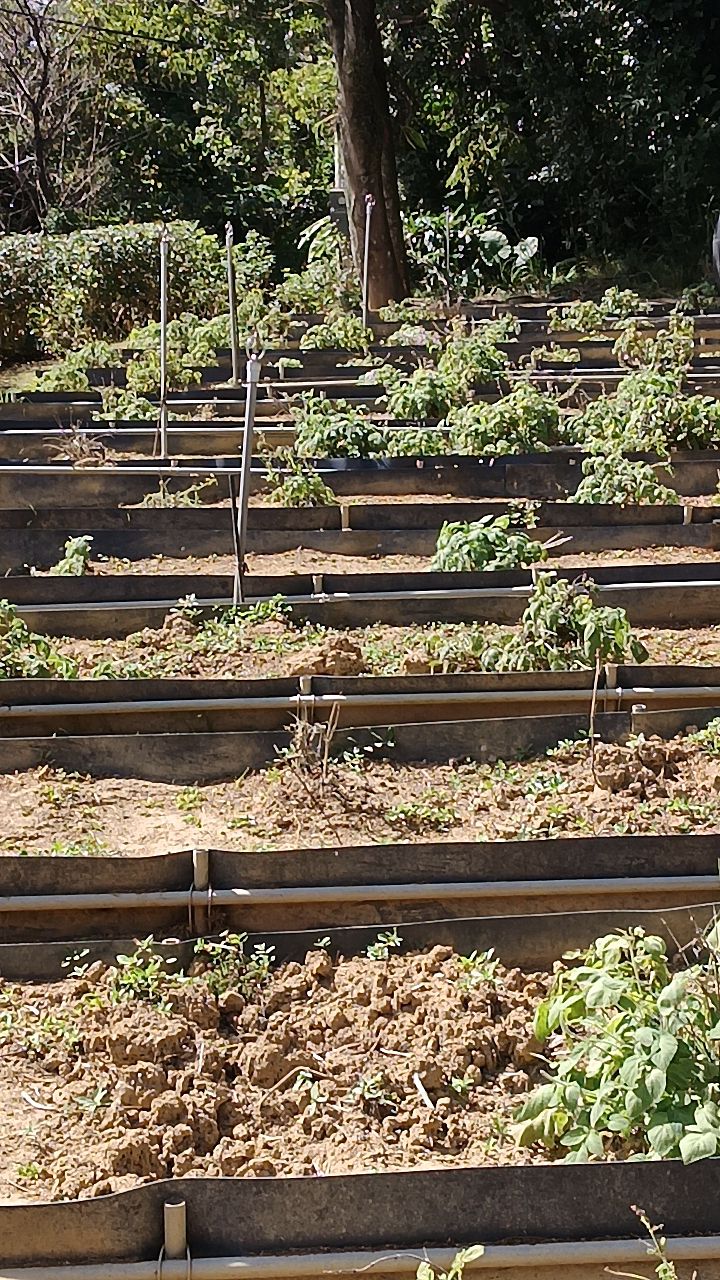
A view of Tianzhao Farm on Dadong Mountain.
Learning About Local Industries Beyond the Classroom
Culinary Culture and Gastronomic Aesthetics is one of the courses participating in the School of Tourism’s University Social Responsibility (USR) project at Ming Chuan University. Alongside their professional studies, students learn about distinctive industries in communities near the university. Course activities help them build relationships with local small-scale farmers, institutions, and businesses, putting the university’s commitment to serving and caring for its neighbors into practice.
To help students understand how Taiwanese food culture connects with local development in Guishan, Taoyuan, the course explored regional food traditions and invited the owner of Tianzhao Farm to campus to discuss the farm’s approach, its specialty produce, and the owner’s experience developing local agriculture. The farm visit built on the classroom sessions, giving students a firsthand look at growing conditions and at how small-scale local farmers run their operations and put their ideas into practice.
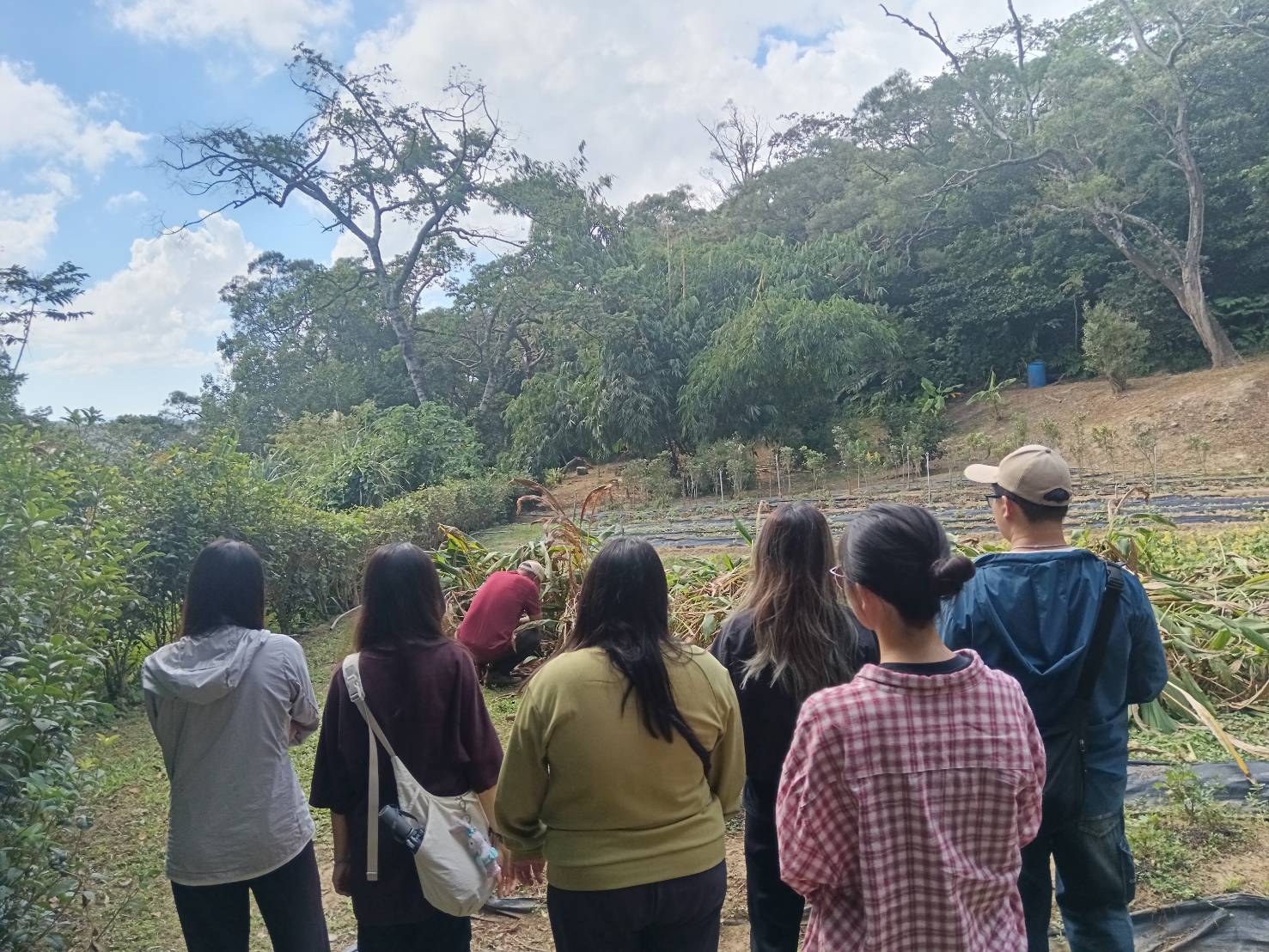
Students visit Tianzhao Farm to observe growing conditions and cultivation methods.
Exploring Local History and Landscape at Dadong Mountain’s 405 Highland
The class also visited the nearby 405 Highland to get another perspective on what makes Dadong Mountain distinctive. Along with its striking natural landscape, the mountain has historical and strategic significance because of its geography. Exploring the area firsthand helped students see how the terrain, local history, and community life are connected, and how closely food culture is tied to the local past, the natural environment, and the way people live.
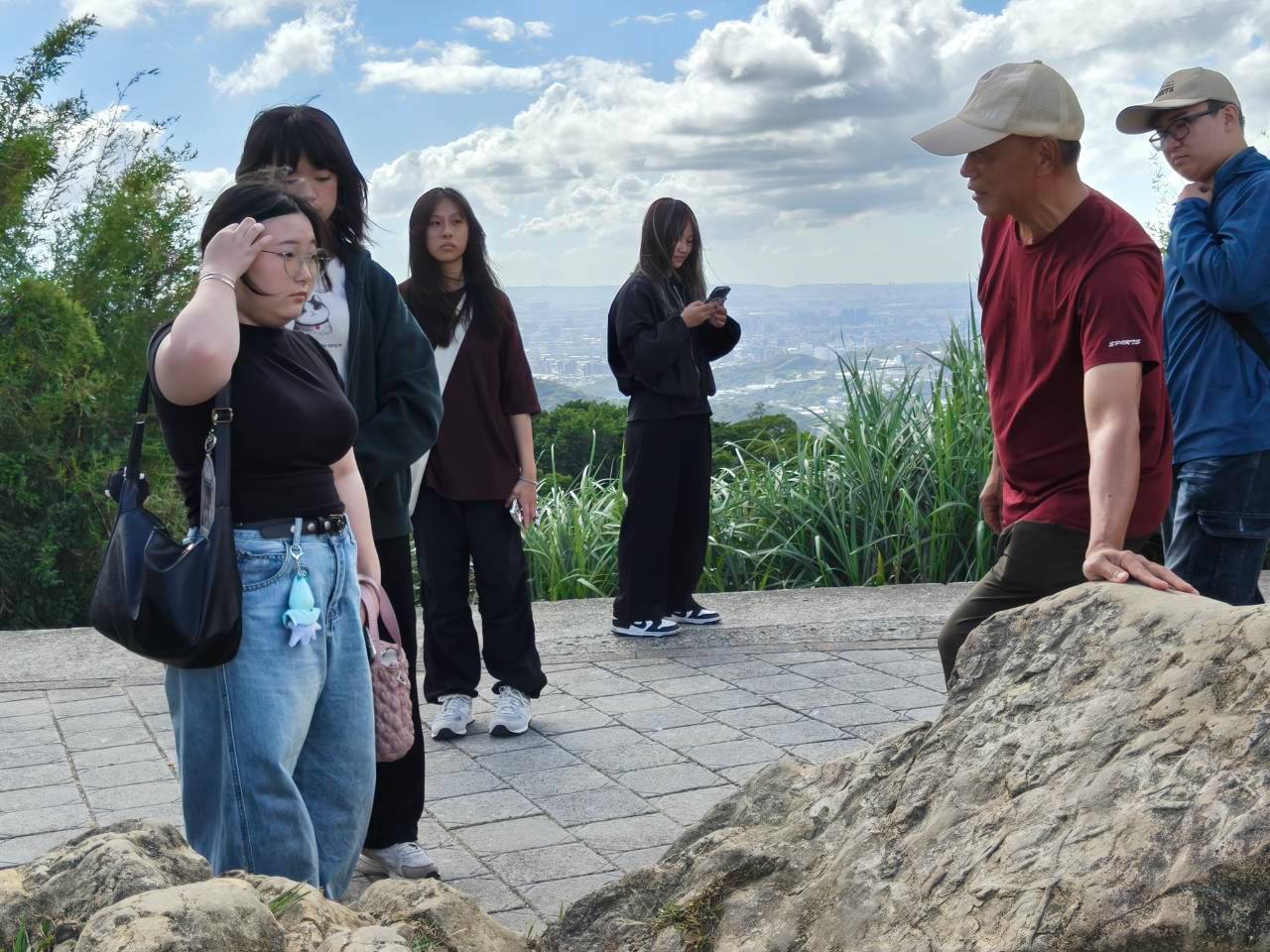
Students visit Dadong Mountain’s 405 Highland to learn about local culture through its landscape and history.
Digging for Danshen, “Taiwan’s Ruby,” and Learning Where Food Comes From
The owner of Tianzhao Farm introduced students to danshen (丹蔘), known as “Taiwan’s ruby,” and to the farm’s range of organic crops. Students dug up danshen, visited the ecological pond, and learned about organic crops, observing their growing conditions, cultivation methods, and characteristics firsthand.
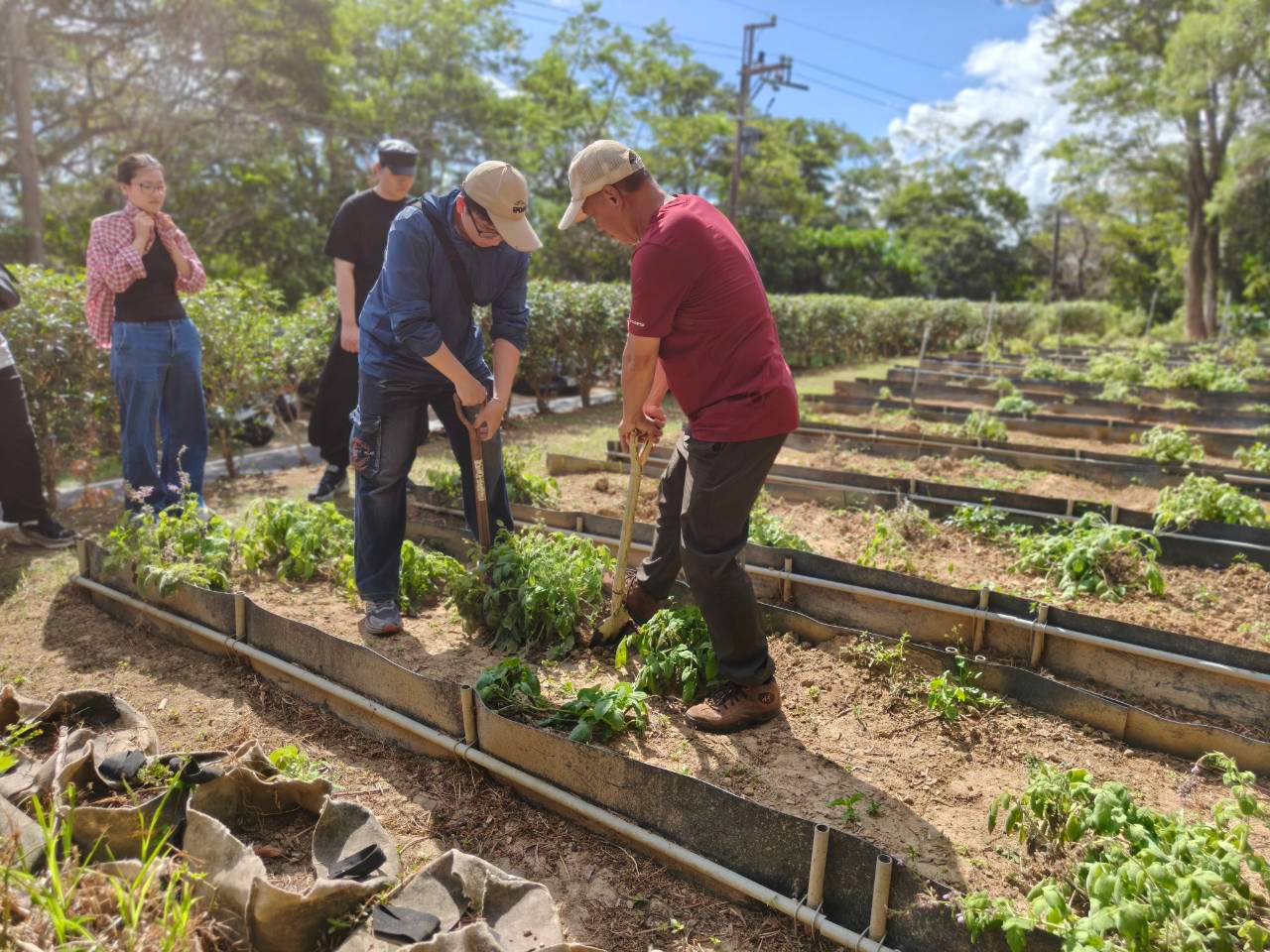
Students dig up danshen at the farm.
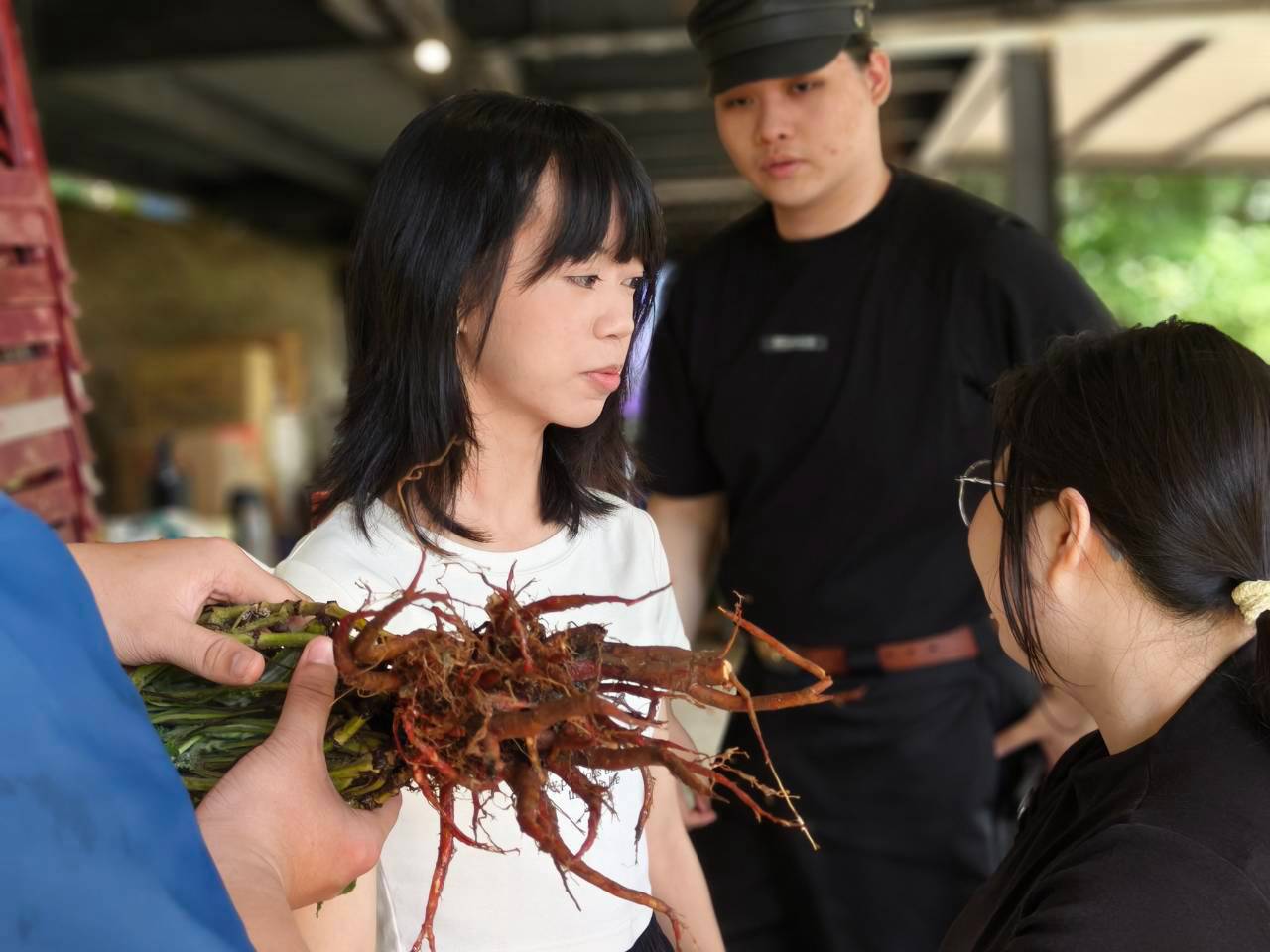
Danshen, known as “Taiwan’s ruby.”
For hospitality management students, understanding ingredients includes knowing where they come from, how they are produced, and how agriculture interacts with the natural environment. The visit gave students a better understanding of local specialty crops and a chance to consider the links between local farming, food culture, and sustainable development from a farm operator’s perspective.
Putting University Social Responsibility Into Practice Through Community Engagement
The trip took students beyond campus and gave them a chance to work with local small-scale farmers. Those interactions help students get to know community resources, understand the challenges and opportunities facing local industries, and consider how their hospitality expertise can contribute. Each part of the experience connected theory with practice, from studying food culture and hearing the farm owner’s story in class to visiting the farm, harvesting crops, and exploring local history.
At Ming Chuan University’s Department of Hospitality Management, we believe hospitality education is not only about food and service, but also about understanding culture, respecting the land, and caring for the community. Through teaching that brings together local character and firsthand experience, we hope students will develop cultural understanding, environmental awareness, and a sense of social responsibility alongside their professional skills—letting learning leave the classroom, connecting knowledge with the land, and making every field trip a valuable chance to get to know Taiwan, explore its culture, and put professional learning into practice.