
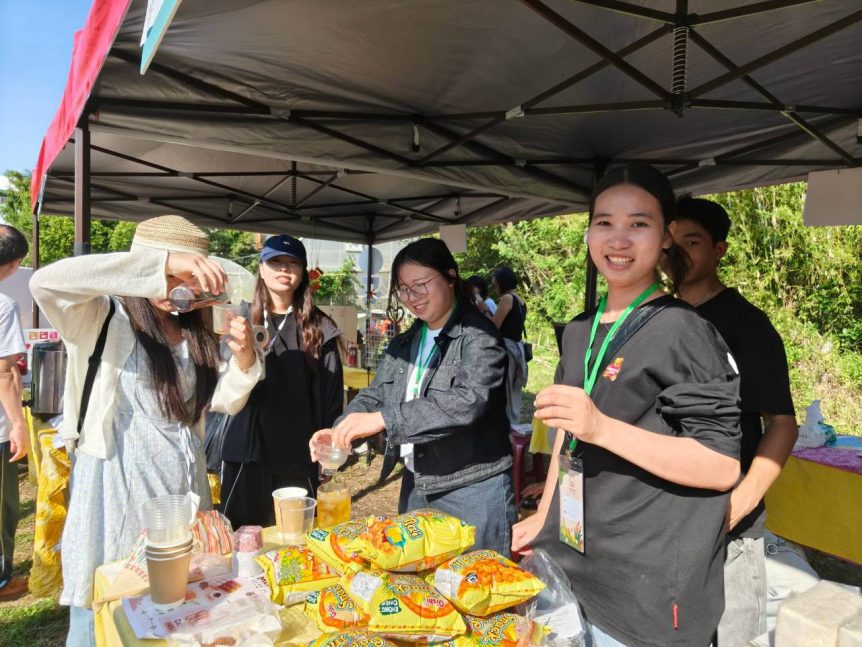
Who says Food Science has to stay in the classroom? With a little creativity and what students learned in class, Taiwanese ingredients became authentic Vietnamese treats.
On Sunday, 1 November 2026, students from the Department of Hospitality Management at Ming Chuan University took their classroom learning to Happy Farm in Longtan, Taoyuan. Most of the students running the stall were from Vietnam. They found creative ways to make traditional foods from home with locally sourced Taiwanese ingredients, giving visitors a chance to try snacks and drinks with flavors from Vietnam.
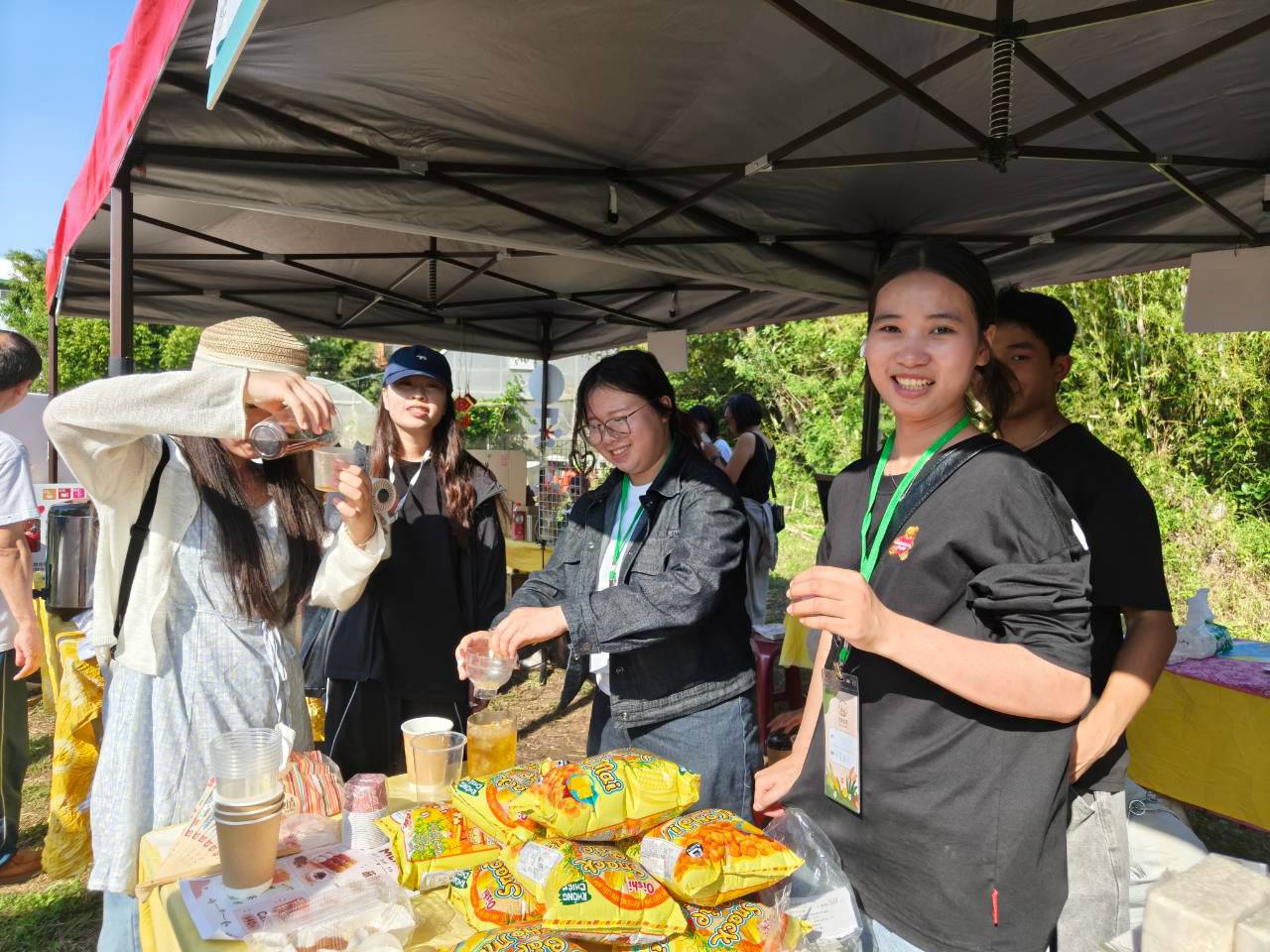
The stall prepares drinks for visitors.
Taiwanese Ingredients × Vietnamese Flavors Make for Delicious Surprises
The stall sold Vietnamese mochi, iced kumquat tea, Vietnamese iced coffee, and specialty cookies from Vietnam. The main ingredients for the coffee and cookies came from Vietnam, while all the ingredients for the mochi and iced kumquat tea came from Taiwan. The students took the initiative to find recipes online independently of their instructor, researched how to make each item, and practiced until their products were ready to sell.
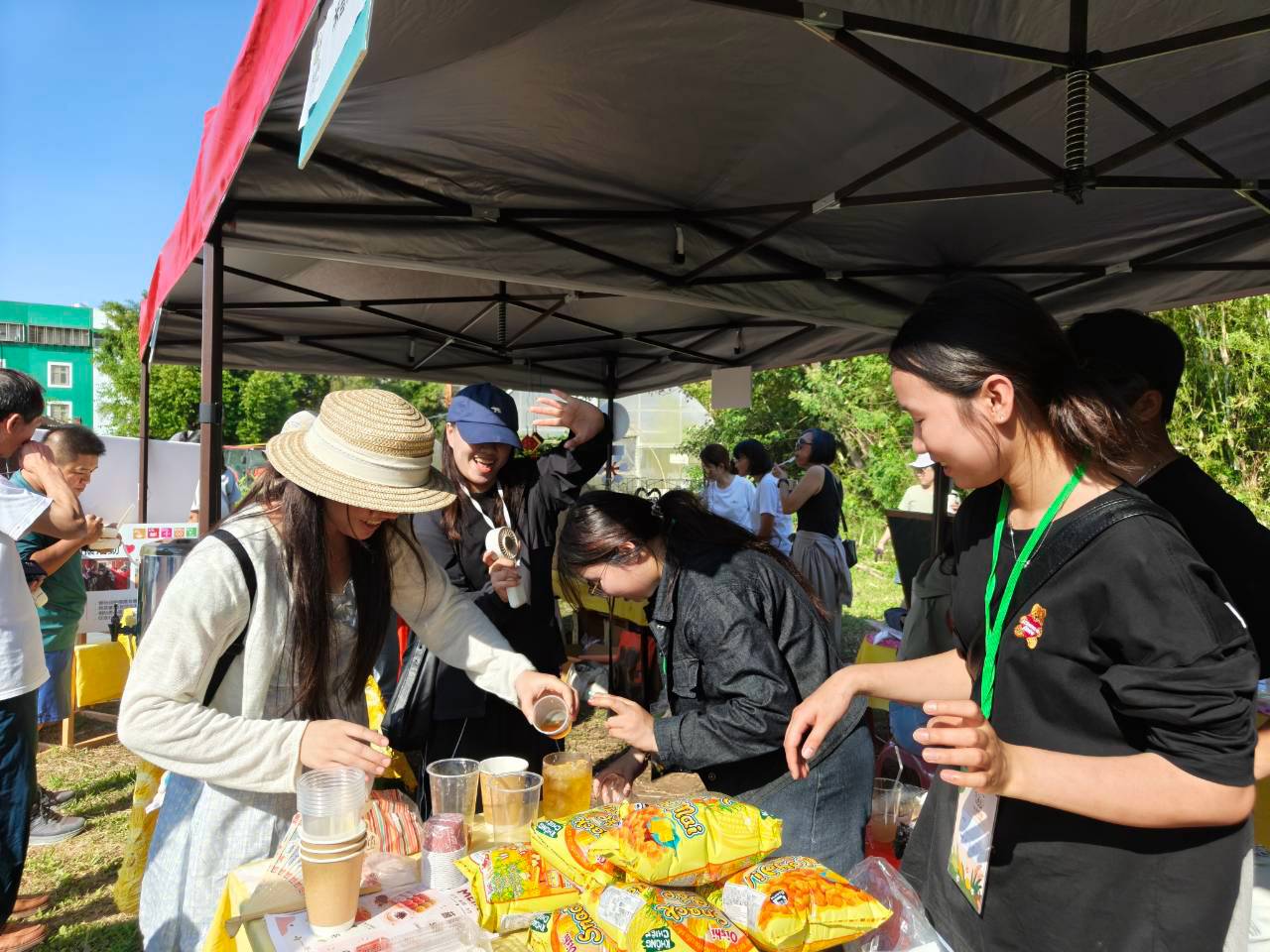
Products combining Taiwanese ingredients with Vietnamese flavors draw shoppers to the stall.
The First Stall to Sell Out
Visitors loved the combination of local Taiwanese ingredients and Vietnamese flavors. Eager customers kept coming, and the students sold every item, making theirs the first stall to sell out that day. For the students, the response affirmed their hard work, independent learning, and willingness to try something new.
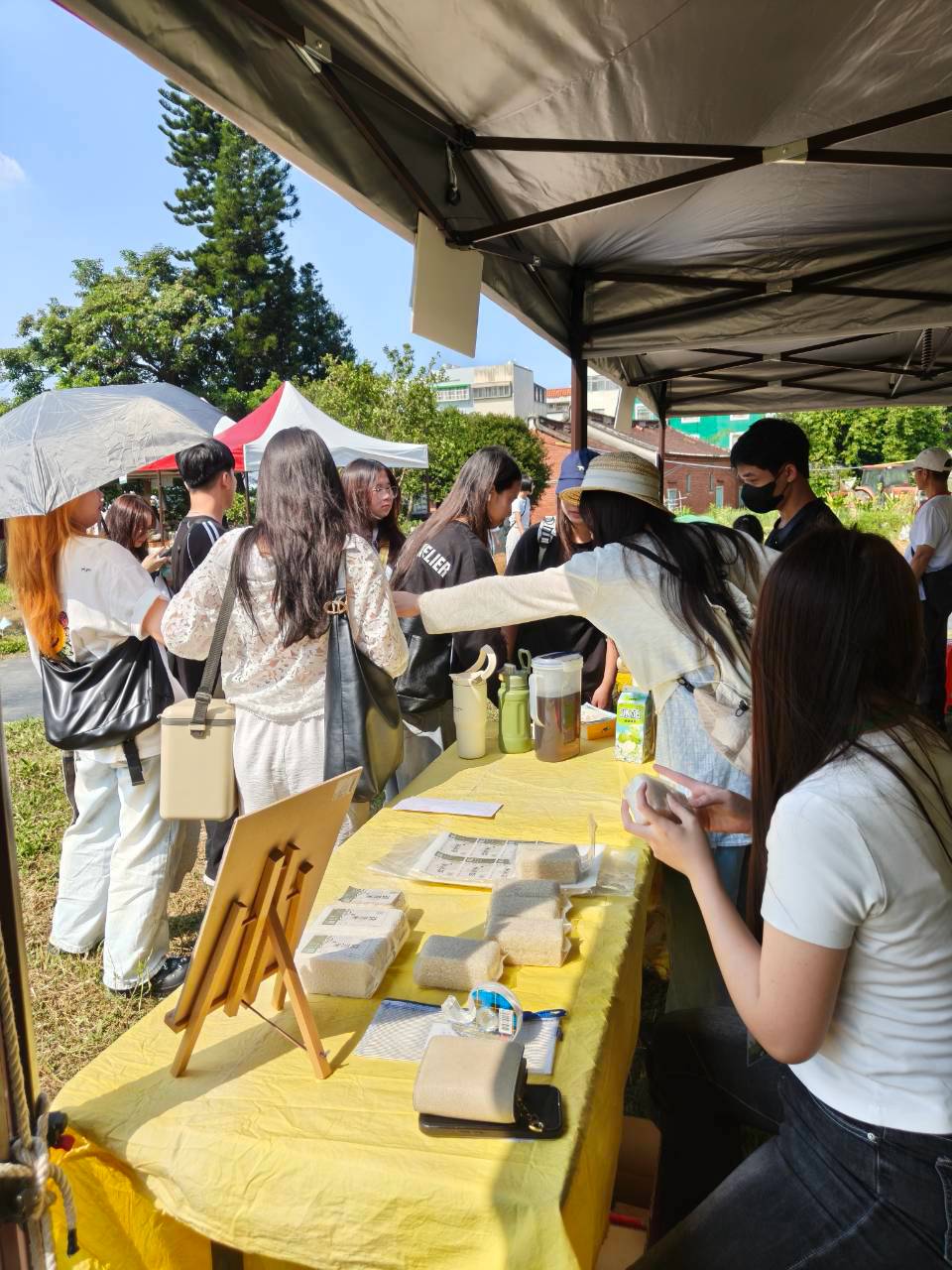
A steady stream of customers stops to shop at the stall.
From Ingredient Properties to Practical Applications in Food Science
In Food Science, students learn about the composition and properties of ingredients, the principles of food processing, and how to apply that knowledge. The Vietnamese students put their classroom learning to work by substituting Taiwanese ingredients for some of those they would use back home while keeping traditional Vietnamese flavors. From choosing ingredients and finding recipes to making products, selling them, and talking with customers, the students applied their food science knowledge and gained practical skills in independent learning, problem-solving, cross-cultural exchange, and food service operations.
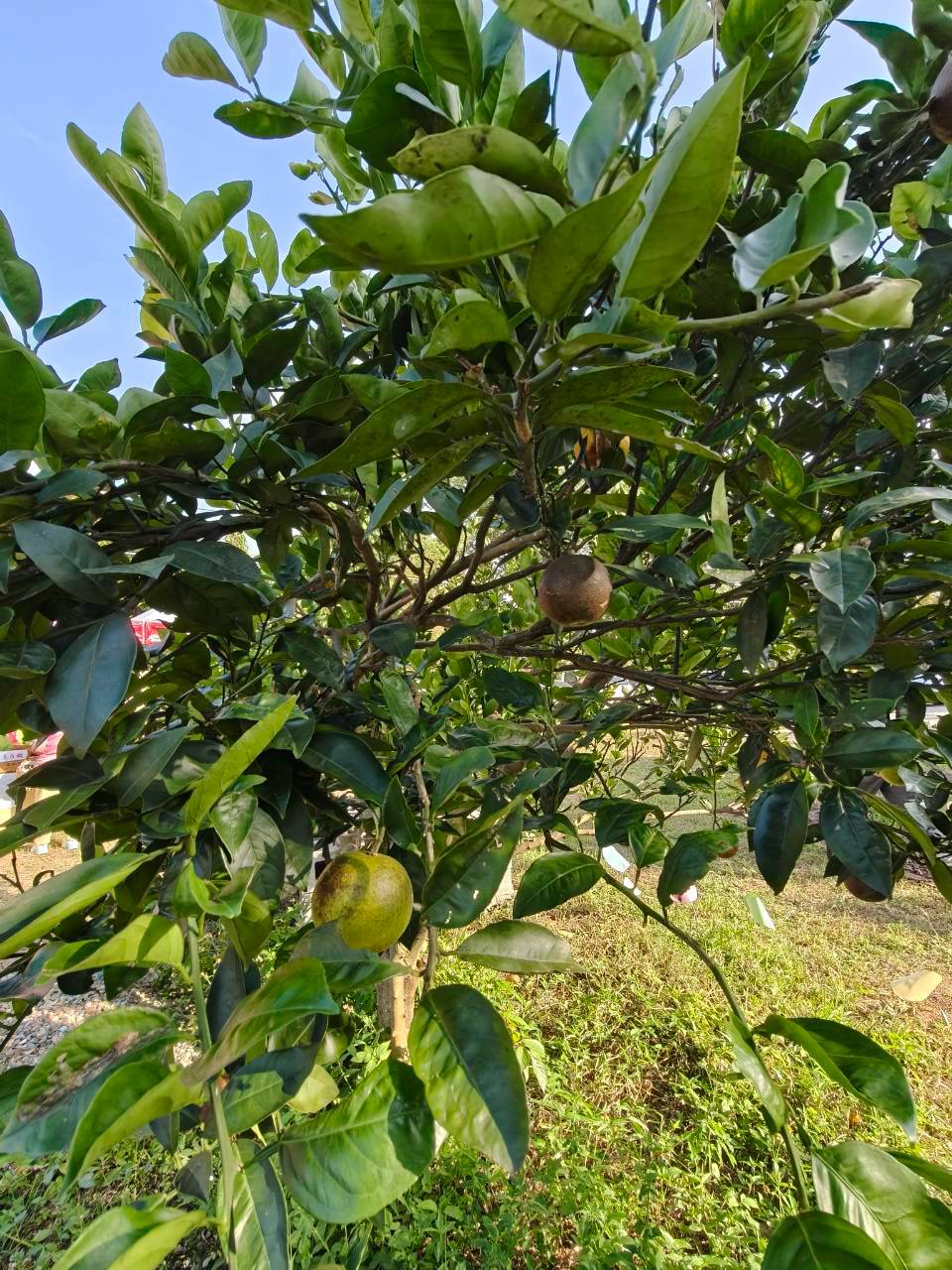
A view of Longtan Happy Farm.
A Sense of Accomplishment Beyond the Day’s Sales
The stall brought in a modest amount of money, but seeing visitors respond so enthusiastically and everything sell out so quickly gave the students a sense of joy and accomplishment they could hardly put a price on. Afterward, many said they hoped to take part in similar events and share the food they make with more people.
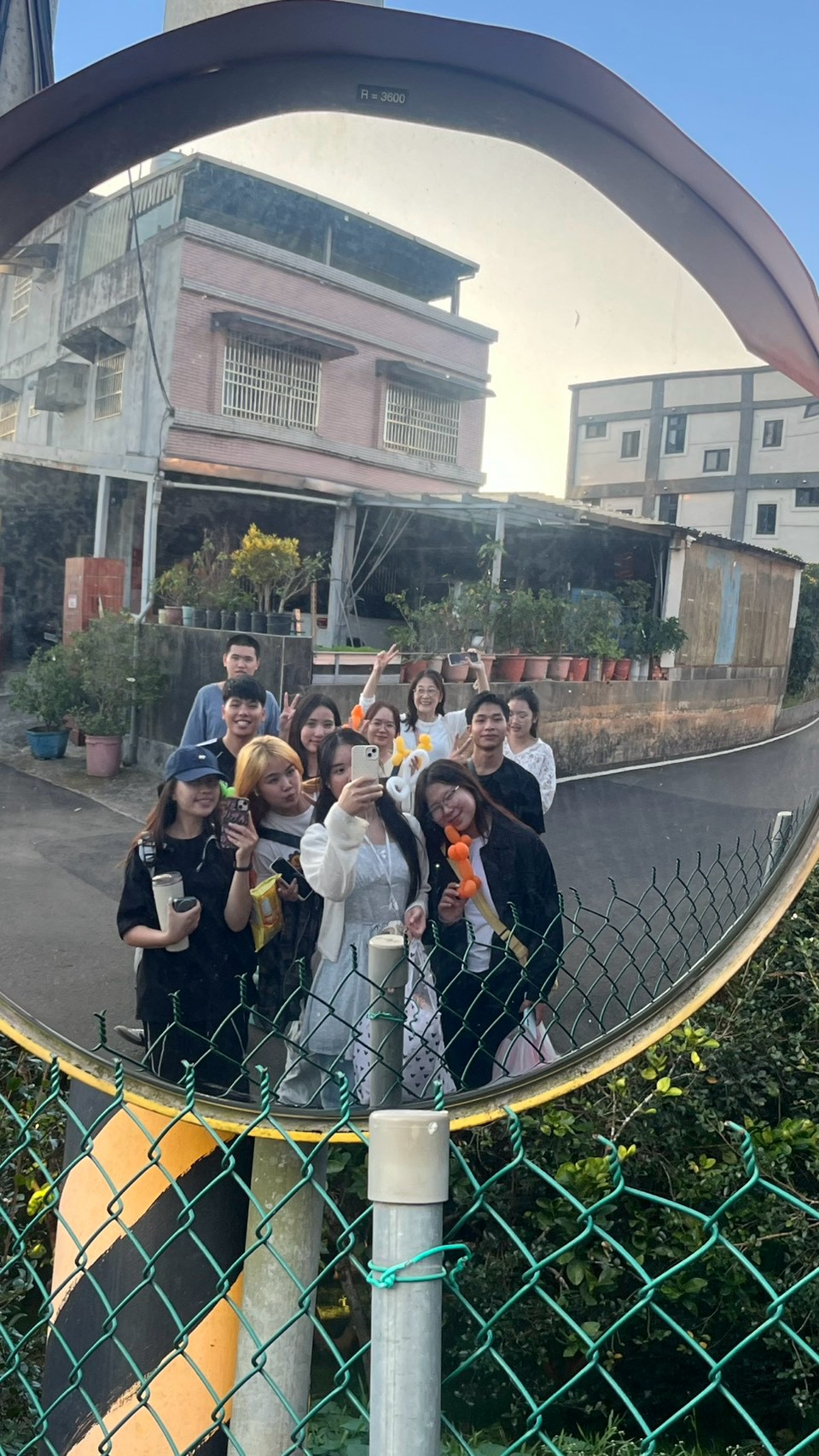
Students take a group photo in a convex mirror.
What We Believe at the Department of Hospitality Management
The most valuable learning takes students from “knowing” to “doing.” The successful field trip showed what students can accomplish when they bring together professional knowledge, their cultural traditions, and their own creativity. We hope more students will step outside the classroom and take part in hands-on activities. With each new challenge, they can gain experience, build confidence, and develop skills they can carry with them.
Ming Chuan University’s Department of Hospitality Management—bringing professional knowledge into everyday life, drawing creativity from diverse cultures, and turning every hands-on experience into fuel for growth!